
1) Relevant Context
Why is the Budget important?
The presentation, discussion and eventual passage of the Central Budget is one of the most important responsibilities of Parliament. The Budget reveals the government’s taxation and expenditure priorities. The difference is the fiscal deficit or fiscal surplus which the government must borrow from markets. That borrowing, in turn, affects market interests (the more the government borrows the higher the pressure on interest rates).
The Budget therefore affects households in profound ways. First, whether they have to pay more or fewer taxes. Second, the manner in which government spends affects their lives (will news roads and parks be created?). Third, what happens to the interest rates they pay on mortgages and auto loans?
But apart from taxing and spending, the Budget is also the occasion the government typically undertakes policy reforms. This year’s Budget was particularly important because US president Donald Trump had announced his intention to raise tariffs on other countries. India’s Budget therefore came against the backdrop of large global uncertainty and the question at hand was- how will the Government respond?
2) Provisions of the Bill
What does the Budget do?
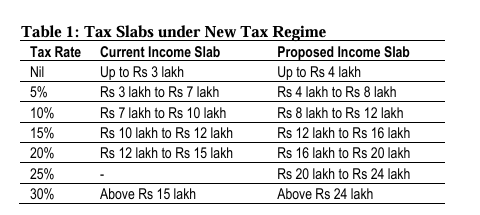
- It reduces the Center’s fiscal deficit from 4.8% of GDP to 4.4% of GDP
- It cuts income tax rate (see the old and news slabs below).
- The income tax structure will undergo a more fundamental overhaul and a new income tax bill will be introduced.
- Expenditures will grow at 7.4%, but less than the assumed growth in GDP, and so will shrink as a share of the economic pie.
- Foreign Direct Investment (FDI) for the insurance sector will be increased from 74% to 100%.
3) Policy Implications:
Why this matters?
- Tax and Fiscal Spending Tradeoffs:
- Your family’s income tax liability will reduce. For a family currently earning Rs 20 lac, you currently pay Rs 2.9 lac as your tax. This constitutes an average tax of almost 15% (14.5% to be precise). However, after the tax cuts, a family earning Rs 20 lacs will pay taxes of Rs 2 lac, or 10%. This is a substantial tax cut for families at the bottom of the income pyramid.
- However, the tax cuts come at a cost. As discussed above, government expenditures are growing much more slowing. The departments where this is true are roads, railways and agriculture. This is therefore likely to impact the quality of existing roads and how many new roads are constructed, and the quantity and quality of railway services, and government expenditures in agriculture. There is no free lunch.
- Government borrowing will come down and is likely to put downward pressure on interest rates because the fiscal deficit is reducing. A family’s borrowing rates should therefore eventually come down.
- Higher FDI into insurance should result in more foreign companies moving to India – offering more insurance option. Greater choice and competition should bring down premia.
Note: Interestingly, the Budget has not reacted preemptively to the Trump tariff threat and will like respond when actions are eventually taken.